

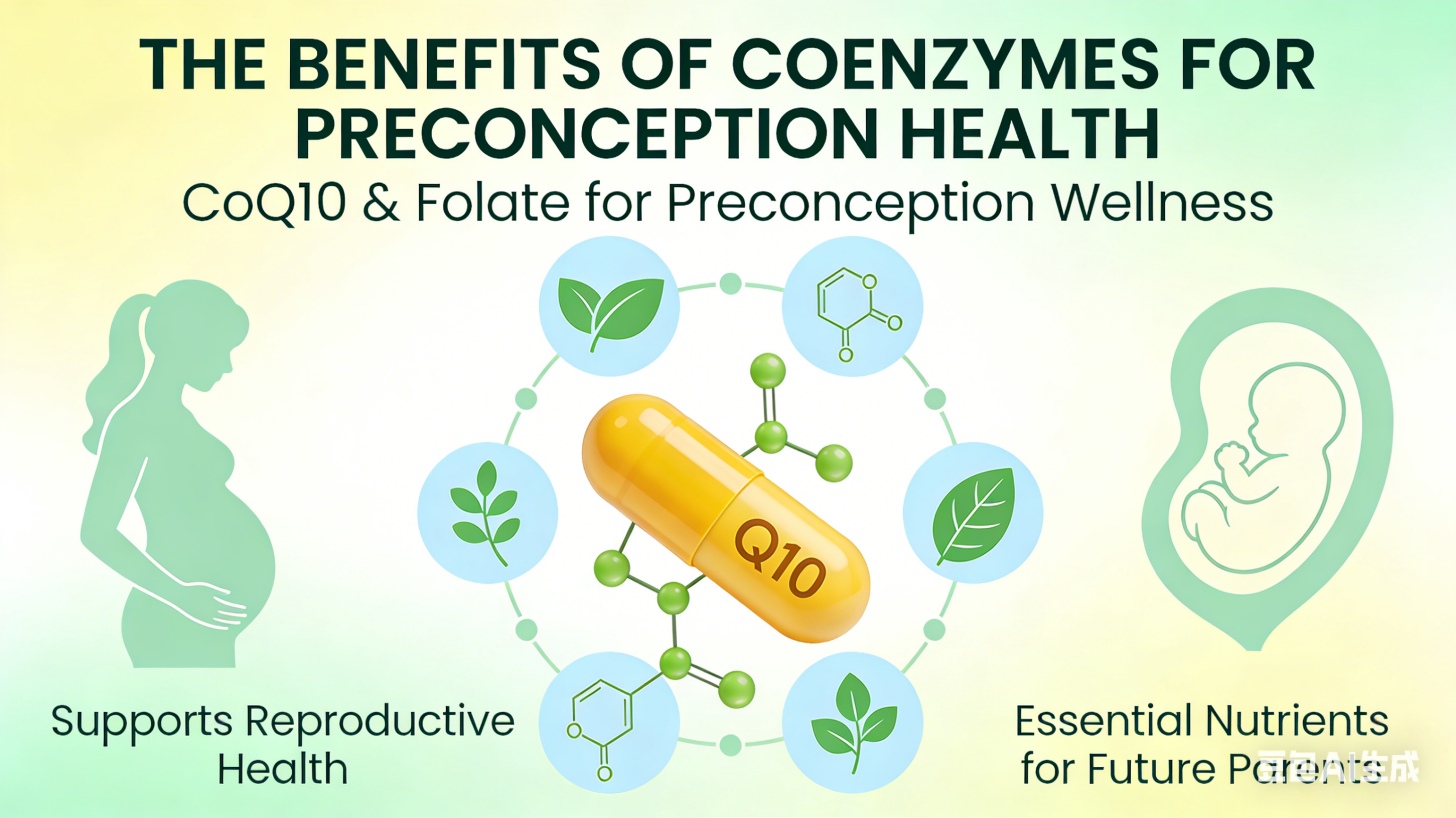

Preconception health is the foundation of a successful pregnancy and the long-term well-being of both parents and their future child. In recent years, research has increasingly highlighted the critical role of coenzymes—naturally occurring compounds that support essential bodily functions—in optimizing fertility and preparing the body for conception. Among the most studied and impactful coenzymes for preconception are Coenzyme Q10 (CoQ10) and folate (a B-vitamin coenzyme), each offering unique benefits that address key factors in reproductive health. This article explores how these coenzymes support fertility, enhance reproductive function, and lay the groundwork for a healthy pregnancy.
Understanding Coenzymes: Essential Players in Reproductive Health
Coenzymes are vital for regulating metabolic processes, protecting cells from damage, and ensuring the proper functioning of organs involved in reproduction. Unlike vitamins, which are often obtained through diet alone, some coenzymes are produced by the body but may become depleted due to age, lifestyle factors, or increased physiological demand—such as during the preconception period. For individuals trying to conceive, supplementing with key coenzymes can help bridge nutritional gaps, correct imbalances, and support the optimal function of gametes (eggs and sperm), which is essential for successful fertilization and embryo development.
Coenzyme Q10: Boosting Oocyte and Sperm Health
Coenzyme Q10 (CoQ10) is a lipid-soluble benzoquinone that plays dual critical roles in reproductive health: it acts as a key cofactor in mitochondrial energy production and a potent antioxidant that neutralizes reactive oxygen species (ROS). Mitochondria, the “powerhouses” of cells, are particularly abundant in eggs and sperm, as these gametes require massive amounts of energy to mature, fertilize, and develop. As individuals age, endogenous CoQ10 production declines, leading to mitochondrial dysfunction, increased oxidative stress, and reduced gamete quality—key factors in age-related infertility.
For women, CoQ10 supplementation has been shown to improve oocyte quality, enhance ovarian function, and increase the number of mature eggs retrieved during assisted reproductive technology (ART) procedures, especially in those with diminished ovarian reserve or advanced maternal age. Clinical studies demonstrate that CoQ10 helps reverse age-related declines in oocyte mitochondrial function, restoring ATP production and reducing meiotic spindle abnormalities that can lead to infertility. Additionally, CoQ10 may support the management of conditions like premature ovarian failure and polycystic ovary syndrome (PCOS), further optimizing fertility outcomes.
For men, CoQ10 plays an equally important role in sperm health. Sperm are highly susceptible to oxidative damage due to their delicate fatty acid composition, and ROS can impair sperm motility, morphology, and DNA integrity—major causes of male infertility. CoQ10 protects sperm from this damage by neutralizing ROS and supporting mitochondrial energy production, which is essential for sperm motility and viability. Research shows a direct correlation between CoQ10 levels and sperm count, motility, and overall semen quality, making it a valuable supplement for men seeking to improve their fertility.
Folate: Preventing Birth Defects and Supporting Reproductive Function
Folate, a form of vitamin B9, is a coenzyme critical for cell growth, DNA synthesis, and methylation—processes that are essential for preconception health and fetal development. Unlike CoQ10, folate is not produced by the body, making dietary intake or supplementation necessary, especially during the preconception period. The World Health Organization (WHO) and most global health authorities recommend that all women capable of becoming pregnant consume 400 micrograms (mcg) of folic acid (the synthetic, more stable form of folate) daily to support fertility and prevent birth defects.
The most well-documented benefit of folate is its role in preventing neural tube defects (NTDs), serious congenital anomalies of the brain and spine that occur in the early weeks of pregnancy—often before a woman knows she is pregnant. Studies show that periconceptional folate supplementation reduces the risk of NTDs by up to 70%, making it one of the most effective interventions for improving pregnancy outcomes. For women with a history of NTD-affected pregnancies, higher doses (4,000 mcg daily) are recommended to further reduce recurrence risk.
Beyond NTD prevention, folate supports reproductive function in both men and women. For women, it aids in ovulation regulation and supports the health of the uterine lining, creating a receptive environment for embryo implantation. For men, folate is critical for spermatogenesis (sperm production) as a methyl donor in DNA synthesis; deficiency can reduce testosterone levels and sperm count, increasing the risk of male infertility. Additionally, folate may help prevent other congenital anomalies, such as cleft lip and cardiovascular malformations, though evidence for these benefits is less consistent.
Synergistic Effects of Coenzymes for Preconception Health
While CoQ10 and folate offer distinct benefits, their combined use can create a synergistic effect that optimizes overall reproductive health. CoQ10’s antioxidant properties protect gametes from oxidative damage, while folate supports the integrity of their DNA—both essential for healthy fertilization and embryo development. For couples undergoing ART, combining these coenzymes may enhance treatment outcomes: CoQ10 improves oocyte and sperm quality, while folate ensures the proper development of the embryo once conception occurs.
It is important to note that coenzyme supplementation should be part of a comprehensive preconception care plan, which includes a balanced diet, regular exercise, stress management, and avoiding harmful substances like tobacco and excessive alcohol. Dosage recommendations vary based on individual needs: for CoQ10, daily doses of 600–1200 mg for 8–12 weeks have been shown to be effective for improving ovarian response and sperm health, while folic acid intake should follow global guidelines (400 mcg daily for most women, 4000 mcg for high-risk cases).
Conclusion
Coenzymes play an indispensable role in preconception health, addressing key barriers to fertility and supporting the foundation of a healthy pregnancy. CoQ10 enhances gamete quality by supporting mitochondrial function and reducing oxidative stress, making it particularly valuable for individuals with age-related fertility challenges or those undergoing ART. Folate, meanwhile, is critical for preventing birth defects and supporting DNA synthesis, ensuring the healthy development of the embryo from the earliest stages. By incorporating these coenzymes into a proactive preconception care routine, couples can significantly improve their chances of conceiving and welcoming a healthy child. As always, it is recommended to consult a healthcare provider before starting any supplementation regimen to tailor recommendations to individual health needs.