

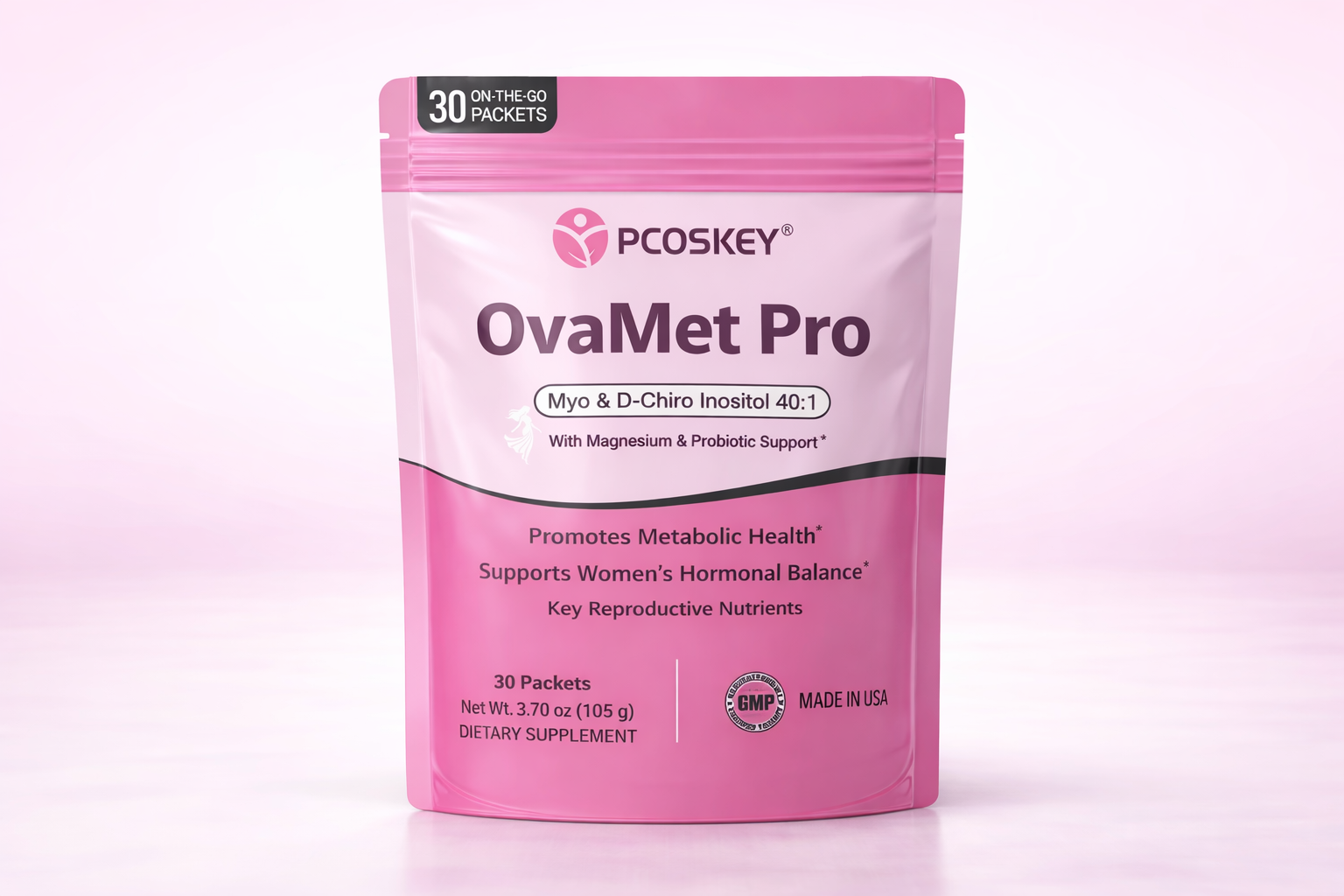

Polycystic Ovary Syndrome (PCOS) is the most common endocrine disorder among women of childbearing age, characterized by ovulatory dysfunction, hyperandrogenism, and/or polycystic ovarian morphology, often accompanied by insulin resistance and metabolic abnormalities. Inositol, a naturally occurring sugar alcohol, has been studied for its role in supporting metabolic and reproductive health in women with PCOS,* with its two main isomers—myo-inositol (MI) and D-chiro-inositol (DCI)—playing key roles in metabolic, hormonal, and reproductive function.
Inositol has been studied for its role in supporting healthy insulin function.* A large proportion of women with PCOS experience insulin resistance, regardless of their body mass index (BMI), which can disrupt the hypothalamic-pituitary-ovarian axis. Inositol, particularly DCI, participates in insulin signaling pathways. Some clinical studies have explored inositol’s effects on glucose metabolism.* Unlike metformin, inositol is generally well tolerated.
Inositol has also been studied for its role in supporting healthy ovarian function and hormone balance.*
Inositol has been studied for its role in supporting reproductive health in women with PCOS, including healthy ovulation and menstrual cycle regularity.*
In terms of metabolic health, inositol has been studied for its role in supporting healthy body composition and lipid profiles.*
*These statements have not been evaluated by the Food and Drug Administration. This product is not intended to diagnose, treat, cure, or prevent any disease.